APIs & services
Secure endpoints, versioning, and predictable contracts that teams can operate and evolve safely.
Architecture Vendor-neutral
We design clean data flows, secure access, and observable services so platforms don’t fail at the seams — across apps, APIs, dashboards, devices, and legacy systems.
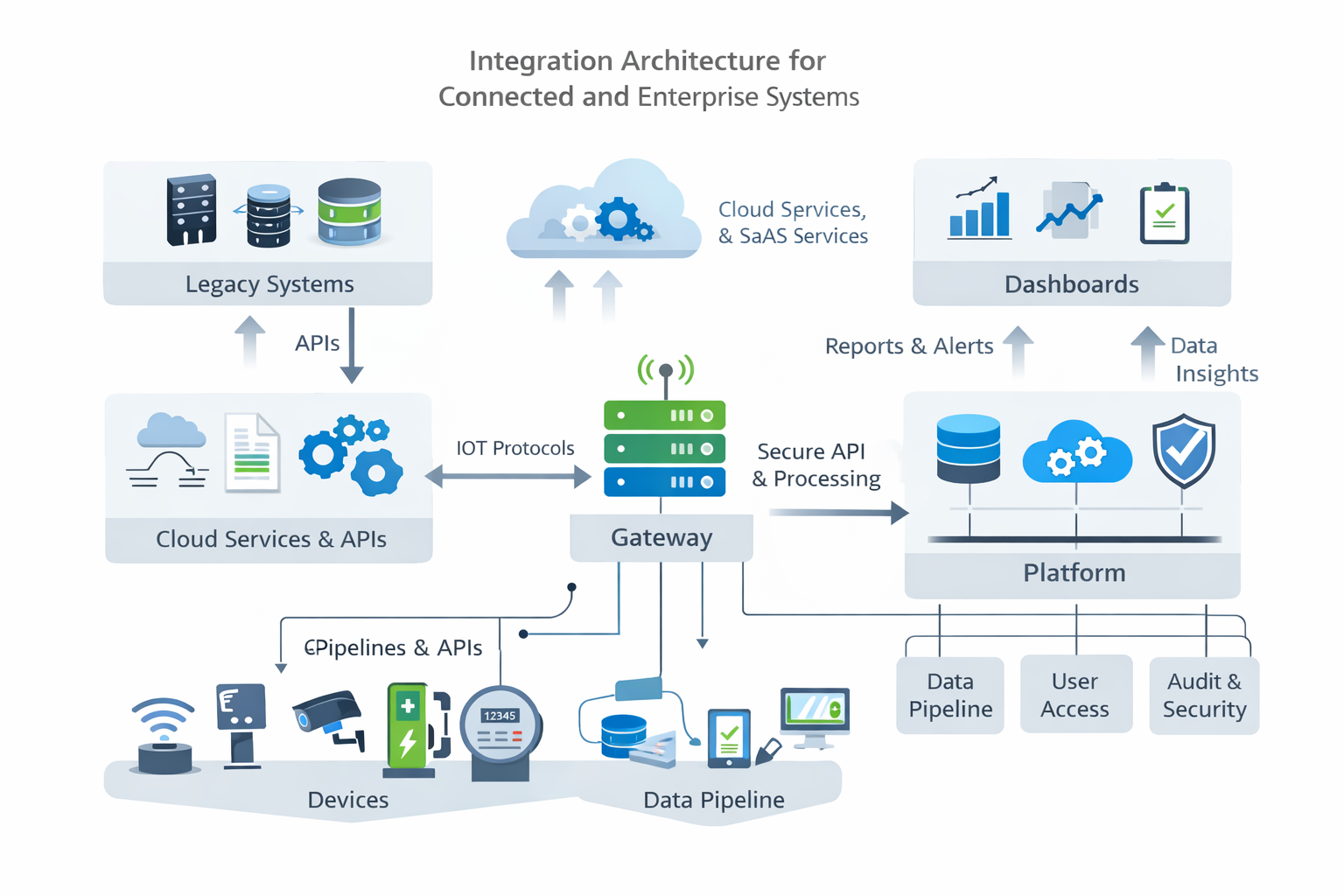
Place your diagram at assets/img/integration-architecture.png.
Patterns that keep complex environments maintainable and explainable.
Secure endpoints, versioning, and predictable contracts that teams can operate and evolve safely.
Reliable ingestion with retries and idempotency, so devices and upstream systems don’t create data chaos.
Normalize → validate → store → report, so dashboards remain consistent and reconciliation is possible.
Connectivity is the easy part. The hard part is ownership, reliability, and handling discrepancies. We design those rules early.
A practical view of how we structure systems across connected environments and enterprise platforms.
Web dashboards, mobile apps, admin tools — with consistent roles and permissions.
Business logic, workflows, validation, and policy rules — designed as maintainable services.
Storage, analytics, and reporting outputs — built for traceability and explainability.
Email your environment details. We’ll propose a clean, phased path.